Sunday, October 22, 2006

Long wont to roam


Helen, thy beauty is to me

Like those Nicean barks of yore

That gently, o'er a perfumed sea,

The weary, way-worn wanderer bore

To his own native shore.


On desperate seas long wont to roam,

Thy hyacinth hair, thy classic face

Thy Niad airs have brought me home

To the glory that was Greece,

And the grandeur that was Rome.


Lo, in yon brilliant window-niche

How statue-like I see thee stand,

The agate lamp within thy hand!

Ah! Psyche, from the regions which

Are Holy Land!


'To Helen' by Edgar Allen Poe

Tuesday, October 17, 2006

Far off and exceeding deep


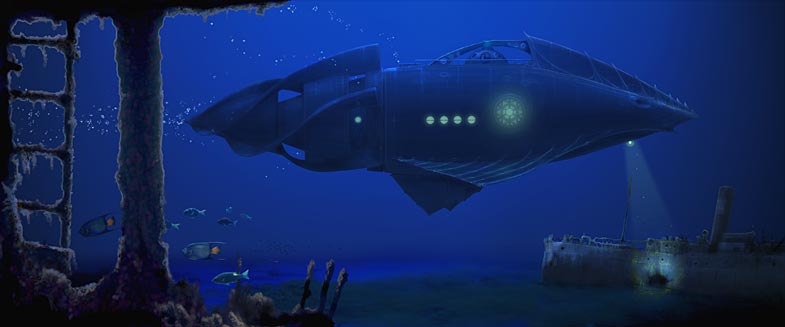
Shall I be believed? I do not know. And it matters little, after all. What I now affirm is, that I have a right to speak of those seas, under which, in less than ten months, I have crossed 20,000 leagues in that submarine tour of the world, which has revealed so many wonders in the Pacific, the Indian Ocean, the Red Sea, the Mediterranean, the Atlantic, the arctic and antarctic seas.

But what has become of the Nautilus? Did it resist the pressure of the maelstrom? Does Captain Nemo still live? And does he still follow under the ocean those frightful retaliations? Or did he stop after that last hecatomb?

Will the waves one day carry to him this manuscript containing the history of his life? Shall I ever know the name of this man? Will the missing vessel tell us by its nationality that of Captain Nemo?

I hope so. And I also hope that his powerful vessel has conquered the sea at its most terrible gulf, and that the Nautilus has survived where so many other vessels have been lost. If it be so -- if Captain Nemo still inhabits the ocean, his adopted country, may hatred be appeased in that savage heart! May the contemplation of so many wonders extinguish for ever the spirit of vengeance. May the judge disappear, and the philosopher continue the peaceful exploration of the sea. If his destiny be strange, it is also sublime. Have I not understood it myself? Have I not lived ten months of this unnatural life? And to the question asked by Ecclesiastes 6000 years ago, "That which is far off and exceeding deep, who can find it out?" two men alone of all now living have the right to give an answer --- Captain Nemo and myself.

From Twenty Thousand Leagues Under the Sea

by Jules Verne

Friday, October 06, 2006

Prayer before birth


I am not yet born; O hear me.
Let not the bloodsucking bat or the rat or the stoat or the club-footed ghoul come near me.

I am not yet born; console me
I fear that the human race may with tall walls wall me, with strong drugs dope me, with wise lies lure me, on black racks rack me, in blood-baths roll me.

I am not yet born; provide me
With water to dandle me, grass to grow for me, trees to talk to me, sky to sing to me, birds and a white light at the back of my mind to guide me.

I am not yet born; forgive me
For the sins that in me the world shall commit, my words when they speak me, my thoughts when they think me, my treason engendered by traitors beyond me, my life when they murder by means of my hands, my death when they live me.

I am not yet born; rehearse me
In the parts I must play and the cues I must take when old men lecture me, bureaucrats hector me, mountains frown at me, lovers laugh at me, the white waves call me to folly and the desert calls me to doom and the beggar refuses my gift and my children curse me.

I am not yet born; O hear me,
Let not the man who is beast or who thinks he is God come near me.

I am not yet born; O fill me
With strength against those who would freeze my humanity, would dragoon me into a lethal automaton, would make me a cog in a machine, a thing with one face, a thing, and against all, those who would dissipate my entirety, would blow me like thistledown hither and tither, or hither and tither like water held in the hands would spill me.

Let them not make me a stone and let them not spill me.
Otherwise kill me.

Louis MacNeice.

Tuesday, October 03, 2006

An unfound door


....a stone, a leaf, an unfound door; of a stone, a leaf, a door. And of all the forgotten faces.

Naked and alone we came into exile. In her dark womb we did not know our mother's face; from the prison of her flesh have we come into the unspeakable and incommunicable prison of this earth.

Which of us has known his brother? Which of us has looked into his father's heart? Which of us has not remained forever prison-pent? Which of us is not forever a stranger and alone?

O waste of loss, in the hot mazes, lost, among bright stars on this most weary unbright cinder, lost! Remembering speechlessly we seek the great forgotten language, the lost lane-end into heaven, a stone, a leaf, an unfound door. Where? When?

O lost, and by the wind grieved, ghost, come back again.

From Look Homeward, Angel
by Thomas Wolfe.

Friday, September 29, 2006

Brave for so long


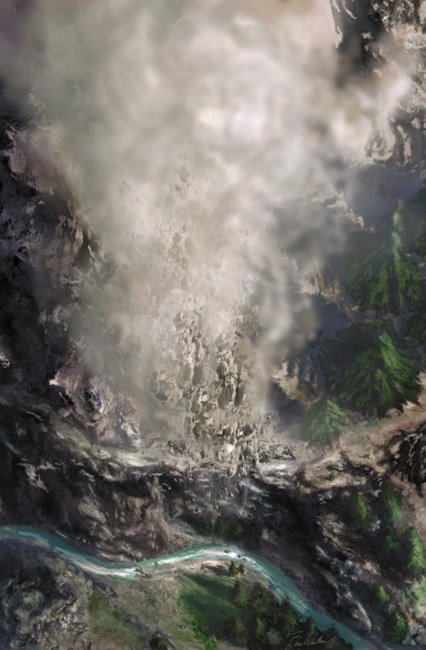
But two there are, shadow us everywhere
And will not let us be till we are dead,
Hardening the bones, keeping the spirit spare,
Original in water, earth and air,
Our bitter cordial, our daily bread.

Turning over old follies in ante-room,
For first-born waiting or for late reprieve,
Watching the safety-valve, the slackening loom
Abed, abroad, at every turn and tomb
A shadow starts, a hand is on your sleeve.

Oh you, my comrade, now or tomorrow flayed
Alive, crazed by the nibbling nerve; my friend
Whom hate has cornered or whom love betrayed,
By hunger sapped, trapped by a stealthy tide,
Brave for so long but whimpering in the end.

Such are the temporal princes, fear and pain,
Whose borders march with the ice-fields of death,
And from that servitude escape there's none
Till in the grave we set up house alone
And buy our liberty with our last breath.

C Day Lewis
from The magnetic mountain (part I; 2).

(Picture: Alan Lee)


Tuesday, September 26, 2006

Mirror of Erised


Harry was so close to the mirror now that his nose was nearly touching that of his reflection.

'Mum?' he whispered. 'Dad?'

They just looked at him, smiling. And slowly, Harry looked into the faces of the other people in the mirror and saw other pairs of green eyes like his, other noses like his, even a little old man who looked as though he had Harry's knobbly knees -- Harry was looking at his family, for the first time in his life.

The Potters smiled and waved at Harry and he stared hungrily back at them, his hands pressed flat against the glass as though he was hoping to fall right through it and reach them. He had a powerful kind of ache inside him, half joy, half terrible sadness.

How long he stood there, he didn't know. The reflections did not fade and he looked and looked until a distant noise bought him back to his senses. He couldn't stay here, he had to find his way back to bed. He tore his eyes away from his mother's face, whispered, 'I'll come back,' and hurried from the room.

From Harry Potter and the Philosopher's Stone

by J K Rowling.

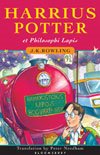
This passage is translated into Latin at Petrona.

Monday, September 25, 2006

"It is no doubt the chief work of my life"


The success of the Origin may, I think, be attributed in large part to my having long before written two condensed sketches, and to my having finally abstracted a much larger manuscript, which was itself an abstract. By this means I was enabled to select the more striking facts and conclusions. I had, also, during many years, followed a golden rule, namely that, whenever a published fact, a new observation or thought came across me, which was opposed to my general results, to make a memorandum of it without fail and at once; for I had found by experience that such facts and thoughts were far more apt to escape from the memory than favourable ones. Owing to this habit, very few objections were raised against my views which I had not at least noticed and attempted to answer.
It has sometimes been said that the success of the Origin proved "that the subject was in the air", or "that men's minds were prepared for it." I do not think that this is strictly true, for I occasionally sounded not a few naturalists, and never happened to come across a single one who seemed to doubt about the permanence of species. Even Lyell and Hooker, though they would listen with interest to me, never seemed to agree. I tried once or twice to explain to able men what I meant by natural selection, but signally failed. What I believe was strictly true is that innumerable well-observed facts were stored in the minds of naturalists, ready to take their proper places as soon as any theory which would receive them was sufficiently explained. Another element in the success of the book was its moderate size; and this I owe to the appearance of Mr Wallace's essay; had I published on the scale in which I began to write in 1856, the book would have been four or five times as large as the Origin, and very few would have had the patience to read it.

Charles Darwin
from "My several publications".